
Two days before my debut novel, The Local News, came out—the story of bookish, socially awkward Lydia Pasternak, whose older, more popular brother goes missing when she’s fifteen—Janet Maslin wrote, in the seventh paragraph of a favorable New York Times review:
Ms. Gershow has been a teacher at the University of Oregon, where some students’ online ratings of her sound like a continuation of Lydia’s high school nightmare. Being regarded as neither popular nor hot seems to be territory that Ms. Gershow knows well, maybe in the classroom and certainly on the pages of her unusually credible and precise novel.
Maslin was referring to Rate My Professor, a website I had never visited, and not out of self-control, of which I am in famously low supply—Oreo cookies for lunch, a whole season of The Ultimatum huffed down in two sleepless nights. I was in my fifth year of teaching a mandatory writing class at a large, public university. I was also in my 38th year of being myself, which was of an entirely different stripe than my leggy, blonde colleague who laughed easily, made clever pop culture references, and gave out As like I gave out warnings that work needed to be handed in complete and on time lest they receive a penalty. My colleague visited her Rate My Professor Page regularly, just as she reread her student evals for pleasure. “They love me,” she loved to say. I didn’t want to know what my students anonymously thought of me, just as I didn’t want to catch myself in a mirror unawares.
To look like I look—Are you a witch? my beautiful toddler once asked from my lap, pointing to the hag’s nose in the pages of Cinderella and then to mine, without a lick of meanness (no one loved me more), only recognition—is to develop a hard candy coating over one’s soft center. It is to be loud and funny, the cleverest person in the room. It is to distract people with your charm. This is not unique to frizzy-haired white girls with bad skin and haggy noses. It’s any woman closer to Ursula than Ariel, any woman shades darker than Snow White’s famously snowy, famously white skin.
I sold The Local News to a Big Five publisher in six days with an advance triple the amount of my adjunct salary. Exactly this—a book—had been my singular goal since a young me had made the move across the country on an Amtrak to shed my Midwest skin and “be a writer” after which followed a decade of monotonous day jobs and community writing groups, followed by an MFA program followed by a fancy fellowship followed by a big-time agent followed by an unsold story collection, and finally, here I was, arrived!
On the day of my book’s release—two days after Maslin’s review—I sat with my husband in our tiny local airport waiting for a flight to Seattle for the book launch, crying. A corner of the internet had mobilized in the way only a corner of the internet could, a small yet collective outrage. My editor had just emailed me a link to a blog post, “Hot or Not Author Syndrome” from The Virginia Quarterly Review. He was excited. All attention was good attention, he insisted. There was a glut of books, anything to rise above the fray. And everyone was on my side.
I refused to click on the link. Were it not about me, I’d surely have clicked, having lost many an afternoon down Twitter wormholes to search out people I did not know getting in fights I had no dog in, goggling at the mess of it all. The mess of it all normally was the best—or most entertaining part—of the internet.
But now I wanted it to stop. I wanted the whole thing to go away. I asked the reporter at the local paper, who was finishing up a big style section profile of me, to please please not bring up Maslin (he kindly complied). This want to disappear was familiar. It moved through me like a wave, like many waves, a tide of exposure and humiliation.
My husband—ever sensible, a man who loved logic and wasn’t embarrassed to return a bad head of lettuce to the grocery store—whispered furious whispers to me in the airport: “We are about to get on a plane. For. Your. Book. Launch. Can you take that in? Can you think of the accomplishment? What you’ve accomplished?” He squeezed my hand. He squeezed and squeezed. “Can you try to not only focus on the one tiny, shitty thing?”
No, as it turned out. No, I could not. Not then. Not for years, an insoluble part of me wholly occupied by the one tiny, shitty thing.
There’d been so many reasons I wanted a book in the world, each one more high-minded and virtuous than the last: because I had something to say; because I loved Nabokov; because sentences mattered; because fiction saved lives. These weren’t lies but they weren’t true either. They were their own fiction.
I’d found out about the New York Times review days before it came out—not the content, but its existence—only the latest fortune in my dream of a first book. The New! York! Times! It was hard to even fathom, me an unknown writer in a small college town on a far coast. If I was nervous about a pan, I don’t remember now. The only thing my editor warned me about was Maslin. “She can be inscrutable. Even if it’s a good review, sometimes you don’t know.”
The review was coming out in the Monday print edition, but it would be live on the website Sunday night. I told everyone—my sister, my parents, my friends, my boss. I refreshed and refreshed the website. My husband stood over my shoulder as I read. Okay, okay, it was good, it was a good review. I don’t remember what happened when I got to the seventh paragraph, but it had to be some sort of distress (did I put my head in my hands? Did I moan? Did I say oh my god, oh my god?) because I remember my husband:
What? he said. What? It’s not that bad. We didn’t have our son yet (I’d be pregnant with him before the paperback release in a year). We could baby each other. We could indulge. It’s fine. It’s okay, my husband said. It’s not that bad. It’s a NEW YORK TIMES REVIEW, the fucking New York Times, he insisted, his logic crumbling under the weight of his good cheer: Nobody will see it.
Why did I want a book? The reason beneath all the other reasons, more feeling than sense, more gnarl than thought, so intrinsic to me it was invisible, irreducible, like my bloodstream or my arteries, was that a book would be the happy ending to the story of the kids in fifth grade calling me pizza face until I cried at my desk, my teacher, stout, strict, Dickensian Mr. Worden, crouching beside my desk asking what happened, me unwilling to say, don’t make me say, he asking me to say more punishment than rescue; of the clutch of older boys in high school, who my friends and I got drunk with on weekends, and who one day apropos of nothing made my name into a joke, squealing it in mock-affection every time they passed me in the hallway, in the street, in the middle of our town’s crowded dollar theater, the irony baked in, screaming my name like a teen idol, me the furthest thing from; of my mother visiting me in college with her embarrassing polka dots and greasy hair and shadow above her lip, saying to me, “You look more and more like me every day, you poor thing;” of the man I loved desperately in my twenties who wanted to sleep with me over and over again, but only when drunk and in secret; of the woman at a Halloween party weeks into dating my now-husband, he and I both dressed as prom queens, who grabbed my wrist and said, “Oh my god, for a second I thought you were a woman,” and then spent the rest of the night circling back and circling back, each time drunker and sloppier, every time grabbing onto me: “Oh my god, I’m sorry. I’m so sorry. I’m so embarrassed. I can’t even tell you,” me knowing I was going to marry the man squeezed into the sequined dress beside me because he thought it was so funny, because he didn’t care.
When is a book not a book? When it was supposed to be a swan. I realized this want—desperate and ragged in me—the moment it was foreclosed upon. A book was to redeem me, worthy and whole. Look at me now, a big deal. A real beaut.
My phone started ringing before I’d even closed out The New York Times in my browser. I refused to answer. I texted my sister and ordered her to head off my mom. I couldn’t stand the thought of her pitying voice. You’ve always been unlucky, she liked to say. Even here in all my good fortune, I could not stand the thought of it.
The people of the internet (I never did read the blog posts, but I read tweets about the blog posts) called out Maslin for her rookie mistake: conflating author with character. I was not Lydia Pasternak; my sister was alive and well, no one I knew had ever gone missing, Lydia was much smarter than me in many ways. My fiction was not thinly veiled autobiography. My fiction was fiction.
I had a Jungian therapist at the time who suggested I find solace in being the focal point of a universal experience. Everyone feels embarrassment, she told me. Everyone feels shame. Why don’t I find meaning in the collectivity of it all? I fired her not long after and for unrelated reasons, though this could have been the reason. The solace was in gawping at other people’s misfortune and feeling grateful to not be them. Everyone knew that. I didn’t say this to my therapist; I knew how it would sound. I always wanted to be the favorite patient up until I didn’t want to be the patient at all anymore.
For years, while nursing a baby and then walking a toddler and then sending a kid off to kindergarten, while teaching ever-rotating slates of 18 and 19-year-olds who may or may not go on to post terrible things about me on the internet, while finding my way through marriage and friendships and family, I struggled to write a second book. Over and over, I got partway through a manuscript—an earthquake strikes in the middle of a sham guru’s seminar; a woman receives a letter from her birth mother except she’s not adopted; a freak bridge collapse brings a community together—and then stopped. I lost the story. The thread. The motivation. I abandoned manuscript after manuscript. It wasn’t a lack of imagination; it was a lack of faith. A new restlessness thrummed in me. I was stuck on Maslin’s seventh paragraph. If writing did not deliver me from myself, what was it for? All that running and running toward deliverance only to be met by my own ugly mug.
Four years before Maslin (I’d come to think of it like that, in eras, before Maslin and after), I had published a short story, “Don’t Leave Me” in Gulf Coast. This was one of my oldest stories, begun in my late twenties in the MFA workshop, framed by a glib, hapless narrator who wears a t-shirt emblazoned Don’t Leave Me to a blind date. I had not read the story in years—nearly two decades—when I returned to it. There was a bit player I had no memory of writing, a bus driver who could easily have gone unnoticed. But my narrator spends three and a half lines detailing her: shiny faced, with frizzy, incorrigible hair “the color of dirt,” and blemishes.
It was like catching myself in a mirror unawares. There I was in the margin of my own story.
The narrator looks at the bus driver and thinks I was glad not to be her. The narrator thinks: what kind of a life is that?
It took me thirteen years to speak of Maslin publicly, and of course, it was in the form of a joke (who’s a funny girl? The one with the big, shiny nose) down in the depths of a ridiculous Twitter wormhole. A bad movie about Marilyn Monroe had just come out (I hadn’t seen it). The movie was based on a book about Marilyn Monroe written by Joyce Carol Oates. Another writer had gone to Twitter to tweet that someone like Oates had no right to write about Marilyn Monroe because Oates was a “literary non-hottie” and therefore could have “no compassion or love for a woman like Marilyn.” From this, a whole genre of “literary non-hottie” tweets were born, from predictable (“I’m going to change my handle to literary non-hottie.”) to hilarious (a bald, bespectacled tweeter: “As a literary non- hottie myself, I make sure never to write about women.”)
I had started finishing books again.
I had been finishing books for years by then, though one after the other did not sell (Did that insoluble part of me blame Maslin for a second book not selling? Quite possibly). I was still running, but it was different now. My father had died. My dearest friend was dying. I had a teenager. I was staring down a second decade with my husband with all the familiarity and slog and home that went with that. I was not pretty; I’d never be pretty. But I’d spent recent years on Zoom, getting used to my face in ways I’d never had to before. I watched myself in meetings. I watched myself watching myself. I was growing out my gray hair, tired of the way the dye turned red and mousy as it faded. I didn’t try to paper over my wrinkles. My wrinkles were my wrinkles. My face was my face. There is no swan in this story.
I tweeted:
You guys. When @JanetMaslin reviewed my novel, she called me a literary non-hottie in her @nytimesbooks review. I can’t believe my moment has finally arrived.
So many surreal things followed. Janet Maslin tweeted back that I needed to “learn to take a compliment.” People jumped into the fray, as people on Twitter did at the time, calling out Maslin and defending me. People also called me out and defended Maslin, Alec Baldwin of all surreal people among them. (“Alec. Baldwin. Knows. You?” my not easily impressed teenager repeated for weeks, asking for the story again and again.) Jennifer Weiner made a TikTok about it. I DM’d Maslin to tell her how profoundly her review had fucked me up then and since. She did not apologize. She told me: “I never said you weren’t hot. I would never do that to another woman, let alone I one whose book I was reviewing.” Then she blocked me.
It was heady and dizzying and ridiculous and public, and I found it funny and terrible and fine. I felt brave and silly. Among the men in my feed debating if I was making a joke or being an ungrateful, whiny shrew, one mentioned: “The review came out thirteen years ago. If she’s been hanging onto it this whole time, that’s weird.”
I had been hanging onto it this whole time, and it was weird.
What kind of a life was that?
I was, of course, my own worst Maslin. The call, famously, had been coming from inside the house. Which is not to excuse Maslin. What she did was amateurish and unnecessary, I’d go so far as to say downright shitty. But if I had not been running so hard and so fast away from my own face, the impact of her two measly sentences seven paragraphs in would not have been so calamitous.
I was reading about the bus driver in “Don’t Leave Me” because I was editing it to include in my story collection, Survival Tips, the first of two books I sold in the months after I tweeted about Maslin. It had been fourteen years since I’d sold my first book. Do I see a causal relationship between my Maslin tweet and my book sales? Of course not (also: of course). I am in my post- post-Maslin era.
I changed the lines about the bus driver. In the version of “Don’t Leave Me” that appears in Survival Tips, she has flat hair, the color of straw. The blemishes are gone. The shine is still there. I’m a sucker, it turns out, for a shiny face. My narrator thinks nothing of her. My narrator was never really the one asking What kind of a life was that? anyway. I was the one doing the asking when I first wrote that story twenty years before, at one of life’s pivot points, cushioned into two years of grad school with no idea what came next, who I would be, who I could be, all my stories half written, a wary squint in every mirror. I don’t have that question now. What kind of a life? I know what kind of a life: messy, surprising, joyful, crowded, heartbreaking, ridiculous, beautiful.
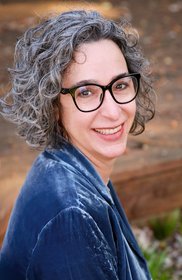
Miriam Gershow is the author of three books of fiction, Closer, Survival Tips: Stories and The Local News. Her creative nonfiction is featured in Salon, Craft, and Heavy Feather Review, among other journals. She is the recipient of a Fiction Fellowship from the Wisconsin Institute for Creative Writing, an Oregon Literary Fellowship, and is a two-time finalist for the Oregon Book Award. She was the organizer of “100 Notable Small Press Books 2025,” a curated list of the year’s recommended books from independent publishers.