

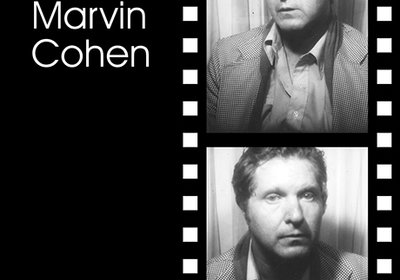
Pete, the Photographer & Other Impressions
Marvin Cohen
Tough Poets Press, Jun 2025
ete, the Photographer & Other Impressions is a posthumous collection of fifteen “pieces” by the prolific New York writer Marvin Cohen who died this year at 93 just days before the vernal equinox. The timing would probably have pleased him. He liked the promise of warmth and light.
I call them “pieces” because, frankly, I don’t know how else to label them—except for those he designates as “Dialogues” because they really are dialogues.
Colin Myers, editor of this collection, agrees and suggests “marvins.” And yes, they are unique, as unique as the tough Brooklyn guy with the mushy heart who wrote them.
Maybe stream of consciousness forays would be a more suitable description for some of the pieces which at times drift into essayistic, philosophical and even metaphysical modes. One thing all these pieces do have in common: they are downright wacky, as if Marvin Cohen were writing scripts for Olsen and Johnson’s “Hellzapoppin”. To make matters more difficult when trying to categorize the contents of this book: the dialogues sometimes truly make you think of Plato or Xenophon (if anyone still reads them). Erasmus, a master of the comic/satiric dialogue, comes to mind too. I doubt Marvin Cohen parleyed with any of these predecessors.
“Pete, the Photographer,” the title story, and longest piece in the book—you might call it a novella—puts you right in the mood: “The day Peter was born it was so dark that it was night already,” we learn in the first sentence. A power blackout in the maternity ward follows, and soon we learn that Peter (who soon will be called “Pete”) has bad eyesight, wears thick glasses and is teased at school. A denizen of the land of darkness, an open wound is his heart, he develops a predilection for art but has no special talent. To make matters worse, according to some arcane medical test, doctors have determined that he has no visual memory. Yes, Pete has all the makings of a loser . . .
And then he discovers photography . . . and like a mythological hero on a quest that will benefit us all (the job of all heroes), he is off on the adventure of his life.
Laden with cameras, film, developing equipment (nota bene: we are in the pre-digital world), he travels far away to a “vast landscape”, all the while, snapping pictures—even of his own shadow. Crocodiles, extinct birds, Arabian leprechauns, spiders, lizards, rainbows are among the marvels he encounters on his way into the unknown until he arrives in a metropolis where he soon becomes a famous photographer. Then comes a scandal, and he is run out of town. More adventures, and next he settles in an antediluvian city whose main attraction is an ancient tower, a tower he will soon come into conflict with . . . verbally. One day the tower collapses. Pete is blamed and must make a hasty retreat. Next stop, an uninhabited island where another tower is the main attraction. Pete, a lonely tower and the ruins of an ancient civilization. That’s all there is here. But this morose tower quickly grows possessive, demanding more and more of Pete’s attention. Again a confrontation with a tower, and this ancient edifice too collapses. Now Pete constructs a boat and off he goes, sailing the endless sea. Of course his photographic equipment is intact. He drifts and drifts till, driven by curiosity, he descends to the ocean floor—naturally equipped with the appropriate protective diving garb, and with camera in hand—and is off on yet further adventures . . .
Clearly this plot is unconventional to say the least. All Marvin Cohen’s plots in this book are. As unconventional as his use of language. He just can’t resist being playful. Yes reader, you are in Marvinland where language is the message. There’s a constant flow of alliterations (“solitude’s lonely solo flight of one’s sole soul, alone in all the solar splendor”), endless puns (“this shouldn’t be Pete’s dust-iny”), cheap jokes and passages you might mistake for rap—though all this was written in the pre-rap era. The author is all over the keyboard: hammering out everything from highfalutin literary parlance to the hard sounds of Brooklyn street-tawk. Some of his puns are only understandable if you savvy his Noo Yawk voice (“to behold its wrath would ore out awe”).
Are there other writers to compare him with? Maybe, but just maybe. Elfriede Jelinek’s love of verbal juggling comes to mind. Ditto Joyce’s. Lautréamont, Henri Michaux, Lewis Carroll veered beyond the edges of fantasy as joyfully as does Marvin Cohen. Or think of Henny Youngman. Perhaps you’ve heard the name or perhaps not. Marvin most certainly knew it. Youngman was a stand-up nightclub comedian who, while playing on his violin, would fire off endless salvos of one-liners that, told individually, might have elicited groans, but as a conglomerate had his audiences knocking over their martini glasses before dropping from their chairs belly-laughing.
It's hard to label Marvin Cohen’s writing. Dadaist is not a good fit. Maybe he was a surrealist. Yes, maybe—but only sometimes. Marvin Cohen is, well, Marvin Cohen.
Some writers strive to keep their language invisible. They remove all verbal obstacles in order to keep a reader’s attention on a complex story. Not Marvin Cohen. He wants you to notice his words.
Still, he is never just all play. Like his “Pete,” Marvin Cohen is driven by a need to snap pictures of this world in all its facets. In his piece “He, For Want of a Better Name,” he narrates the life of a person called . . . “He.” This is done in 26 very short chapters titled “A” to “Z,” an alphabet of time and existence. Occasionally “he” gets to be called “I” and “you.” Naturally, “he” is an Everyman. Yes, “He” is a refreshing contrast to the “me me me!” current in some contemporary literature.
In “How Al Got to the Top,” Al, a Mafia lowlife from Brooklyn, is gunned down at the tender age of 32 by another Mafia lowlife. Jesus Christ happens to observe this violence and feels immediate love and compassion for this wasted life. He transports Al’s soul to the heavenly realm where Al gets to sit around with God and Jesus and exchange metaphysical vistas.
Nota bene: Marvin Cohen is very interested in exploring those deep questions about ultimate meaning. He frequently seethed at the hypocrisy of religion and was happy to describe himself as an atheist. Still, that never stopped him in his writing from mulling over truly gnawing questions like “what am I doing here?” or “what’s this really all about?” In Marvin Cohen’s texts, Mr. Death is always nearby, even when unseen.
In “The Skull Left Off by a Man Who of All He Had Done, How is It to Be Valued,” two interlocutors are discussing the skull of a deceased acquaintance. (Yes, a little nod to old Yorick, I knew him Horatio). The reader never learns who these two speakers are, but the discussion grows increasingly profound—even though the joking never lets up. One passage, I should add, reminded me very much in style and content of the Book of Ecclesiastes. I’m not sure Marvin Cohen would have approved of that comparison.
This very original author was ever searching for the key to the mystery of existence. This especially dominates the final piece in this book: “The Continually Diverging Dialogue.” Here, two antipodes endlessly discuss whether material existence or spirituality is a more valid mindset. Sometimes these two characters sound like Abbot and Costello bantering on a vaudeville stage: nonstop dueling with puns, corny jokes and proto-rap riffs. But this is truly a very serious discussion about very serious stuff. I will not reveal who gets the last word.
I would recommend this book not only to readers interested in fresh, original writing but also to theater people. Some of the pieces in this collection would make very good theater, and I hope some daring director takes the hint. It’s grown-up theater for grown-up audiences.
Pete, the Photographer and Other Impressions is a keeper. Believe me, Marvin Cohen is a writer whose reputation is only beginning to grow. And more good news: I have heard from Colin Myers that there are still many boxes of unpublished “marvins” out there . . . meaning there will be plenty more to come.

P.J. Blumenthal, an American writer in Munich, Germany, writes in both German and English. He is the author of Winston Hewlett’s Impotence (Sagging Meniscus, 2024), a non-fiction book on feral man, Kaspar Hausers Geschwister (Kaspar Hauser’s Siblings), and a German-language blog, “Der Sprachbloggeur.”